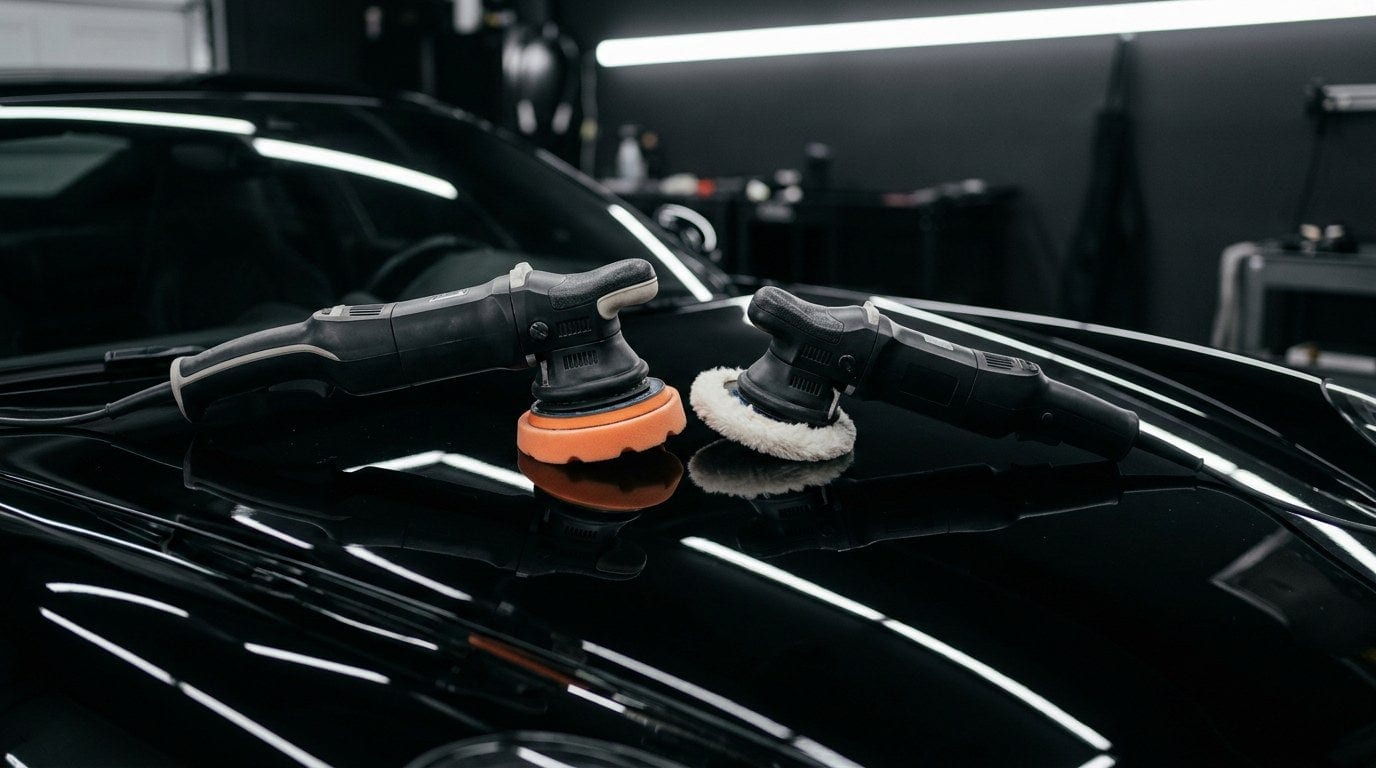
Ferrari 488 Pista - Stage 3 Correction
GLOSS 42 GU → 88 GU · PAINT SAFE

Concourse Studio
Four recent restorations from the clean-room log. Gloss units are measured before and after every treatment, because a finish you can measure is a finish you can trust.
Correction Log
Each handle is keyboard-operable and touch-ready. The dulled left side is the paint as it arrived; the right side is how it left Hangar 04.
GLOSS 42 GU → 88 GU · PAINT SAFE
GLOSS 51 GU → 91 GU · PAINT SAFE

GLOSS 47 GU → 86 GU · PAINT SAFE

HIDE SHEEN 2 → 9 · HIDE SAFE
The Method Behind the Numbers
Every comparison on this page is anchored to a logged reading. A gloss meter measures reflected light at a sixty-degree geometry in gloss units, and we record it panel by panel before a machine is switched on and again at handover, so the improvement you drag across is the improvement we can prove.
If a reading cannot be reproduced, it does not go on the work order. That discipline is the difference between a detail and a documented restoration.
Studio Instruments
Three calibrated instruments open every work order and close every handover.
Gloss Meter
Reflected light in gloss units, sixty-degree geometry
Paint Depth Gauge
Micron-level clear-coat readings on steel and aluminium
Sun-Gun Array
1,200 lux of defect-revealing light, every angle
Correction Log
Restoration Questions
The five questions we answer most often at intake, before a booking is ever confirmed.
Every panel is depth-mapped before we begin, and correction removes only microns of clear coat, far less than a respray or years of automated washes ever will. We log thickness at more than forty points and stop at the safe limit, which is why our work orders carry the words paint safe. If a panel is already too thin to correct, we tell you and seal it instead.
Black and dark paints show every defect and reward correction most dramatically. Silver and white finishes gain depth rather than mirror, and matte paint is never machine polished, it receives decontamination and dedicated matte products instead. The intake inspection sets the expectation panel by panel before you commit to anything.
The correction itself is permanent: swirls that are removed do not come back. What protects the result is what you seal it with. A maintained ceramic finish holds ninety-eight percent gloss retention across a five-year warranty, and paint protection film takes the stone chips and wash marring before the paint ever sees them.
Most vehicles are. The ninety-minute intake inspection settles it definitively: we map paint depth, photograph defects under the sun gun and grade what is correctable. Daily drivers, garage queens and concours entrants all leave with the same measured finish, only the before picture differs.
Only with written permission. Many clients prefer their vehicles stay private and we honour that without exception. If you are happy to be featured, we photograph the same panels we measured, so the comparison the world drags across is an honest one.
Every restoration above started with a ninety-minute intake inspection. Book yours and we will map your paint before quoting a dollar.